
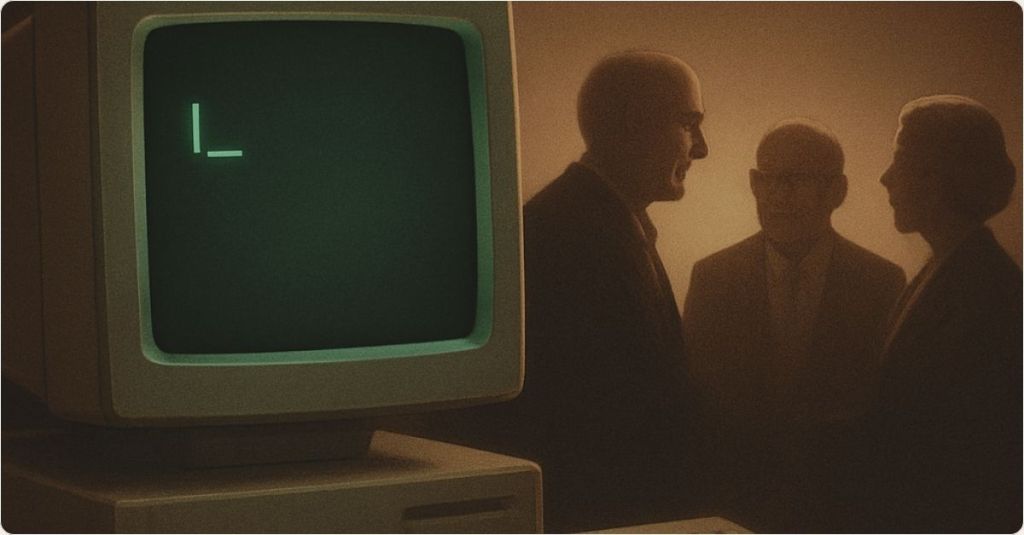
The little rectangular cursor quietly blinked, daring us to get a single command wrong. Was it “bin or win” we had to type at the DOS prompt?
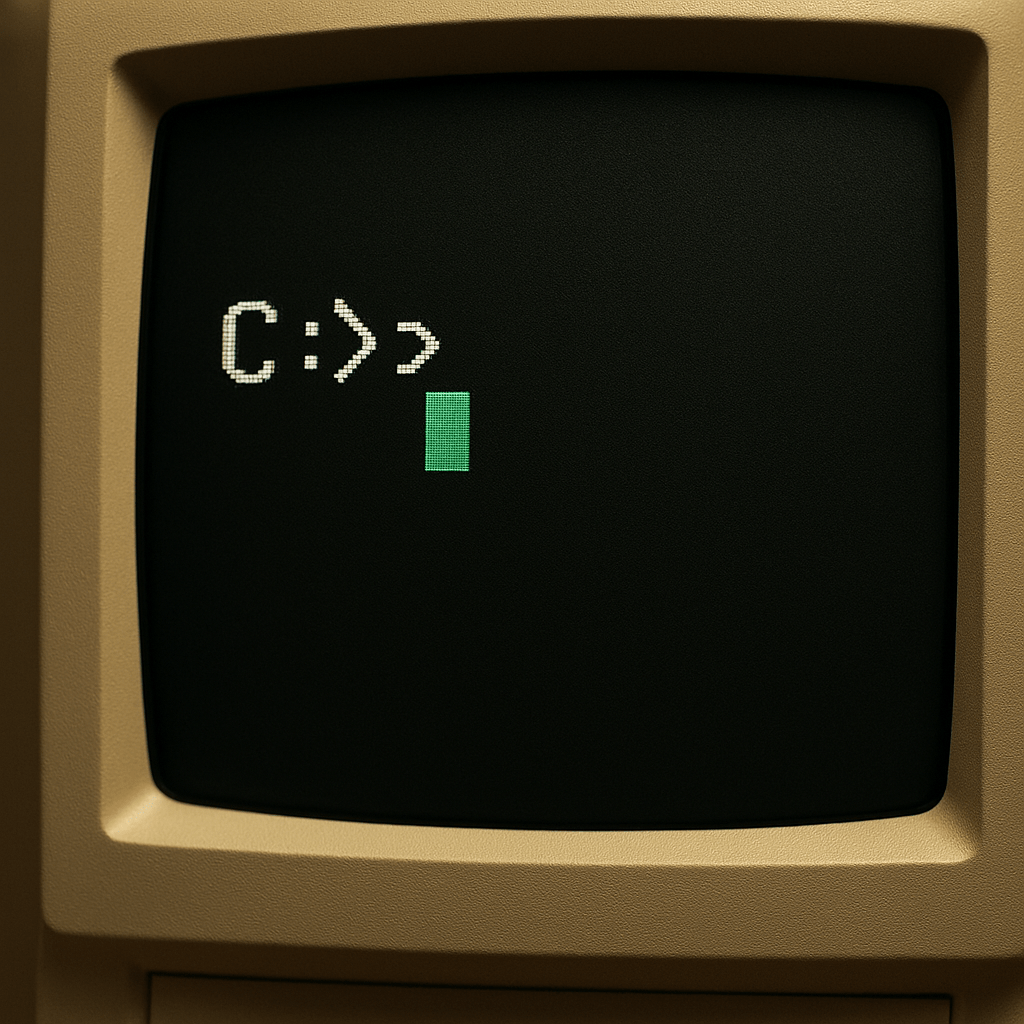
For many of us in the Boomer and Gen X generations, that was our first real relationship with a computer. In those mid‑1990s days, we agonised over syntax, memorised commands, and celebrated the small victories when something finally worked (usually after several attempts). We invested time, patience, and emotional energy in understanding how to make the machine, in all its evolving forms over the years, respond to us.
Fast‑forward to today, and I’m speaking my thoughts aloud while an AI collaborates with me in real time. No commands, no manuals, no fear of breaking anything. Just fluid, intuitive partnership. It’s astonishing how far computing has come in one lifetime.
But here’s the uncomfortable truth I’ve been sitting with.
We evolved our relationship with the screen and keyboard, but neglected our relationships with each other. I remember loved ones getting irritated whenever I was on a call with them and they heard the clickety‑clack of my typing. Do you?
Somewhere along the way, the screen became our constant companion. Our comfort. Our shield. Our bit on the side.
It’s predictable, responsive, and never asks us to do the hard emotional work that real human relationships require.
And in leadership, this has consequences.
Senior leaders have spent decades mastering systems, platforms, workflows, dashboards, and digital tools. They’ve poured energy into understanding how to work productively with technology. But they haven’t invested the same intentionality into understanding the humans sitting right beside them.

My work now is helping leaders redirect that energy. I like to remind them that:
- If you could learn DOS, you can learn your team’s dynamics.
- If you could master email, you can master trust.
- If you could adapt to Zoom or Teams, you can adapt to real conversations.
It’s time to put as much effort into nurturing workplace relationships as we once put into learning how to make computers behave.
All this is because the future of leadership won’t be defined by how well you work with machines, but by how well you work with people.
If you’re wondering how to strengthen the way you work with peers in your senior team, you’re very welcome to explore the services I offer. They’re designed to help leaders deepen relational intelligence, build trust, model interdepartmental working and create the kind of senior team culture where real conversations can happen.

Please Leave Your Reply Here!